Through the Eyes of a Junior Musher by Annika Wolfe

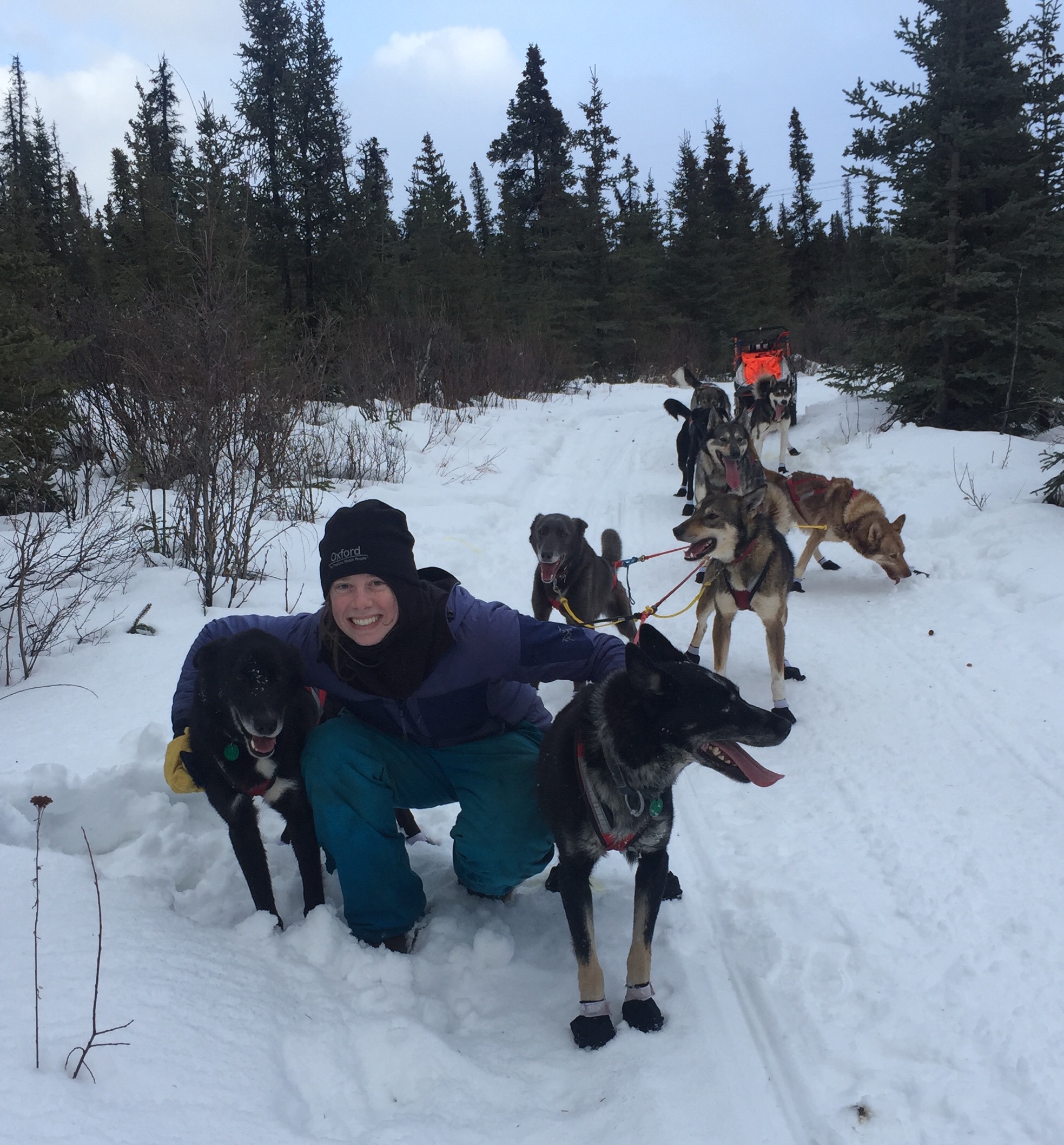
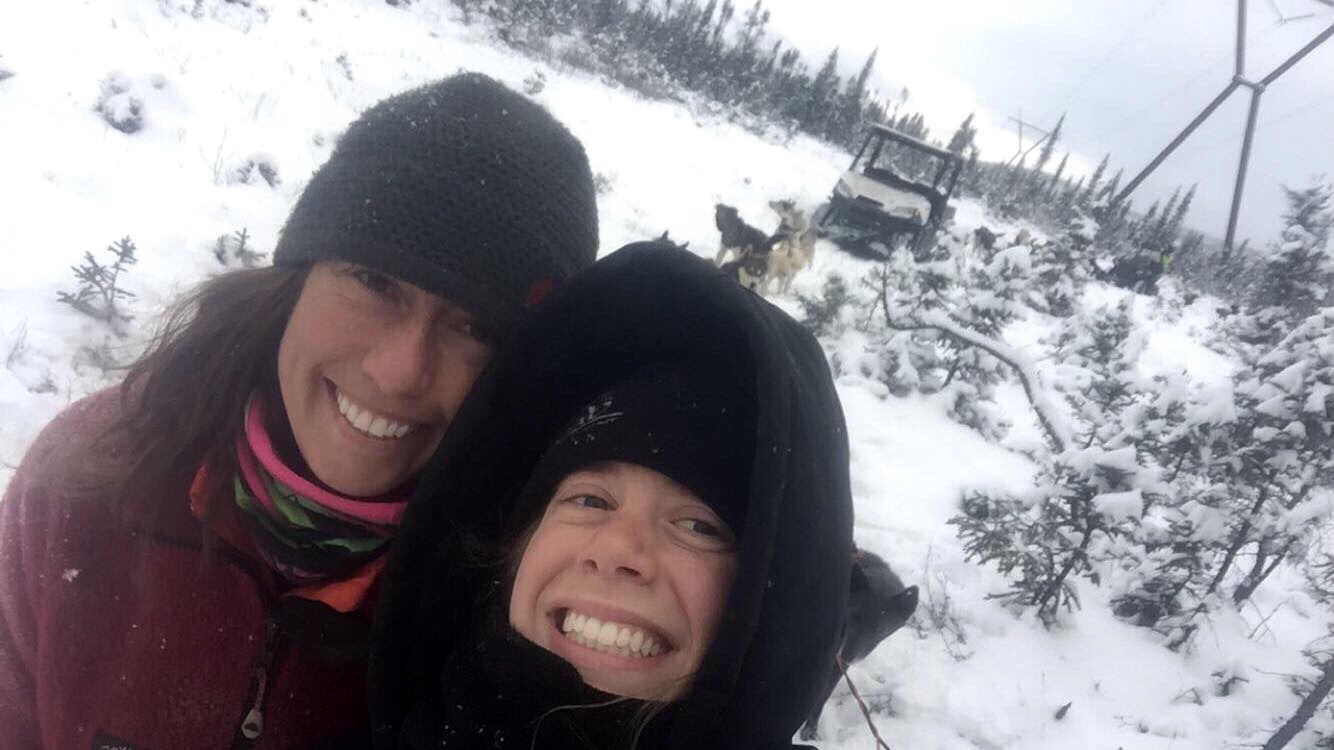
Hello! My name is Annika and I am a new musher. I don’t have very much experience with mushing and asked if Kristin would be my mentor and help me learn how to mush. When I first met Kristin Bacon I was really nervous but when I got there and met Kristin I knew it was going to be fine. I do love Kristin dearly.

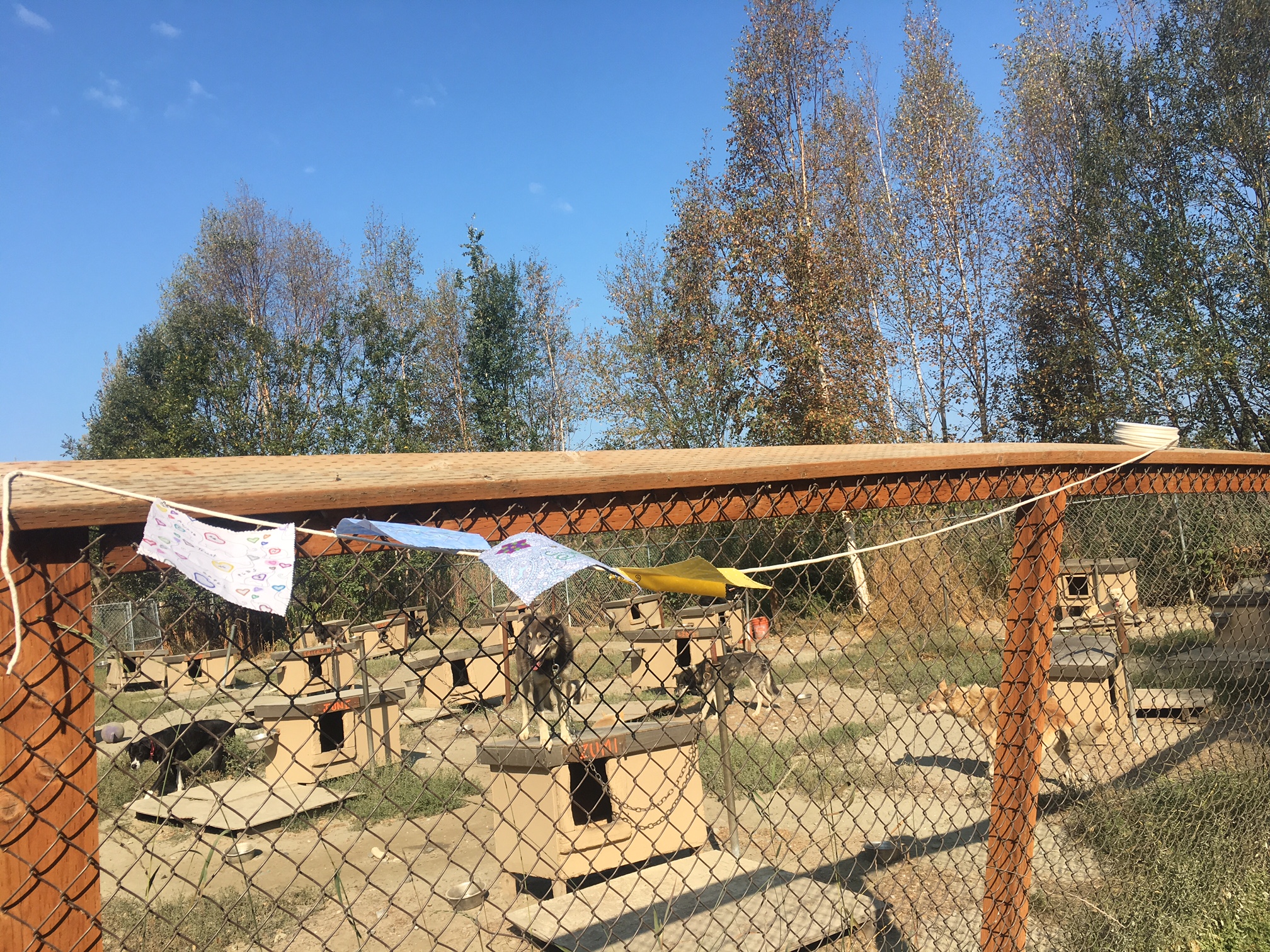
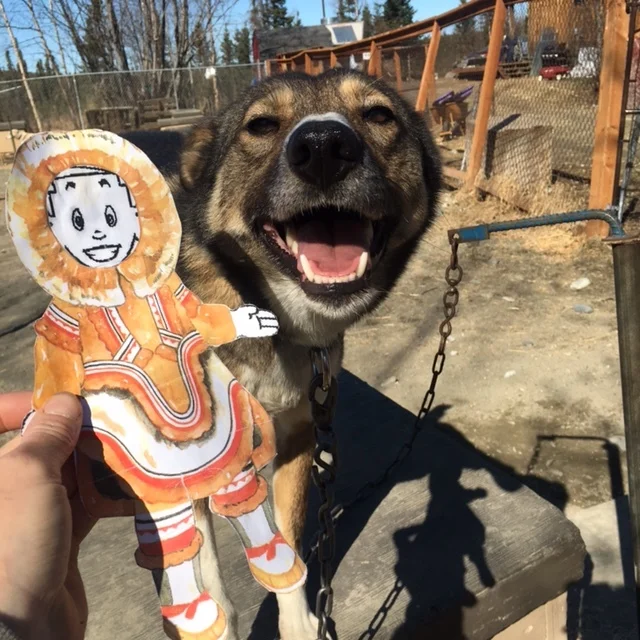
I first went around the dog yard and met every single dog she has 25 dogs!!! Some of the dogs names are: Mr. Paws, Little Bear, Tricky Mini, Miyuki, Jesse, Fairy, Pixie, Troll, Felon, Libby, June, and Crimson of course. These are the names of some of her dogs.

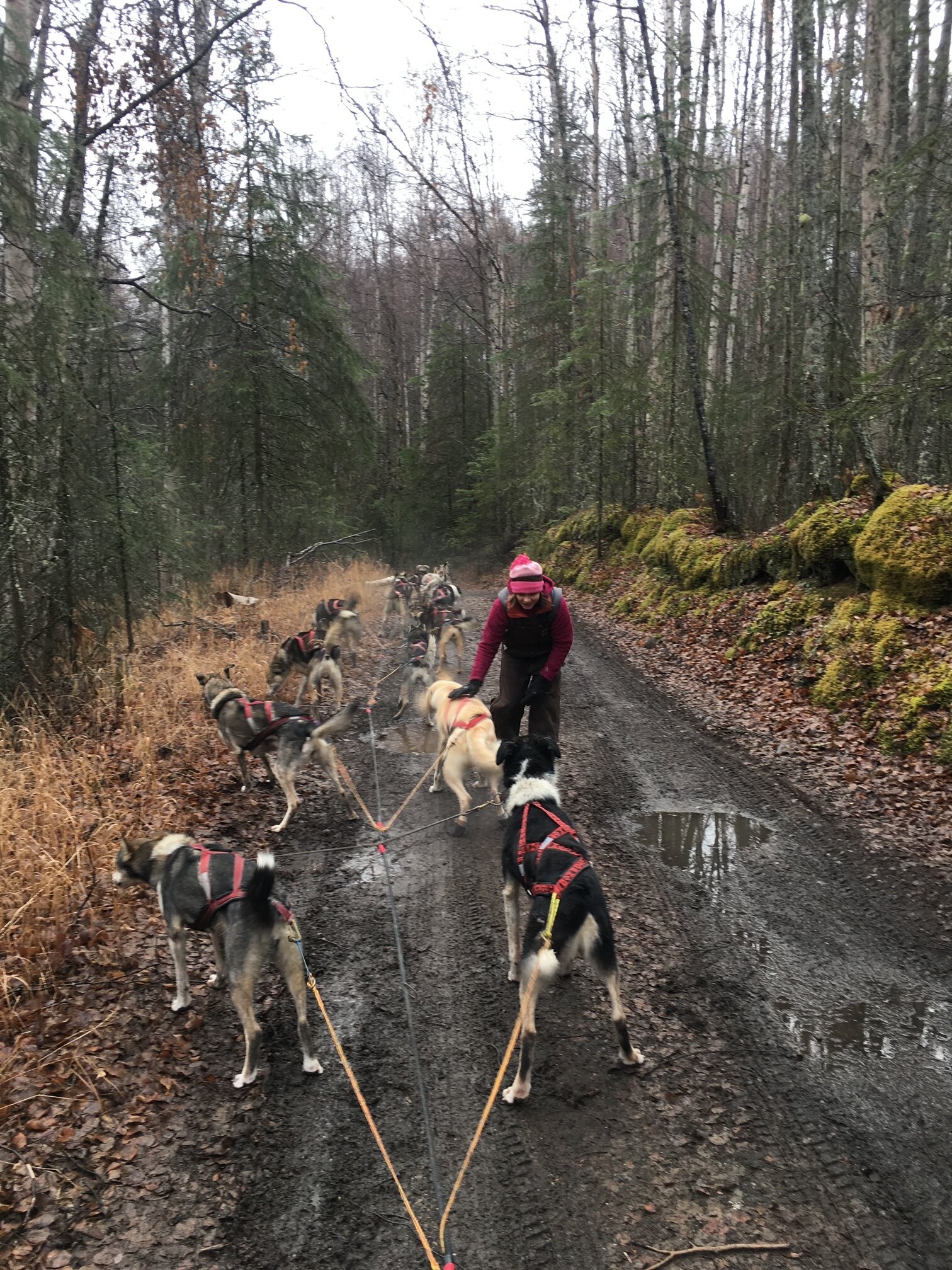
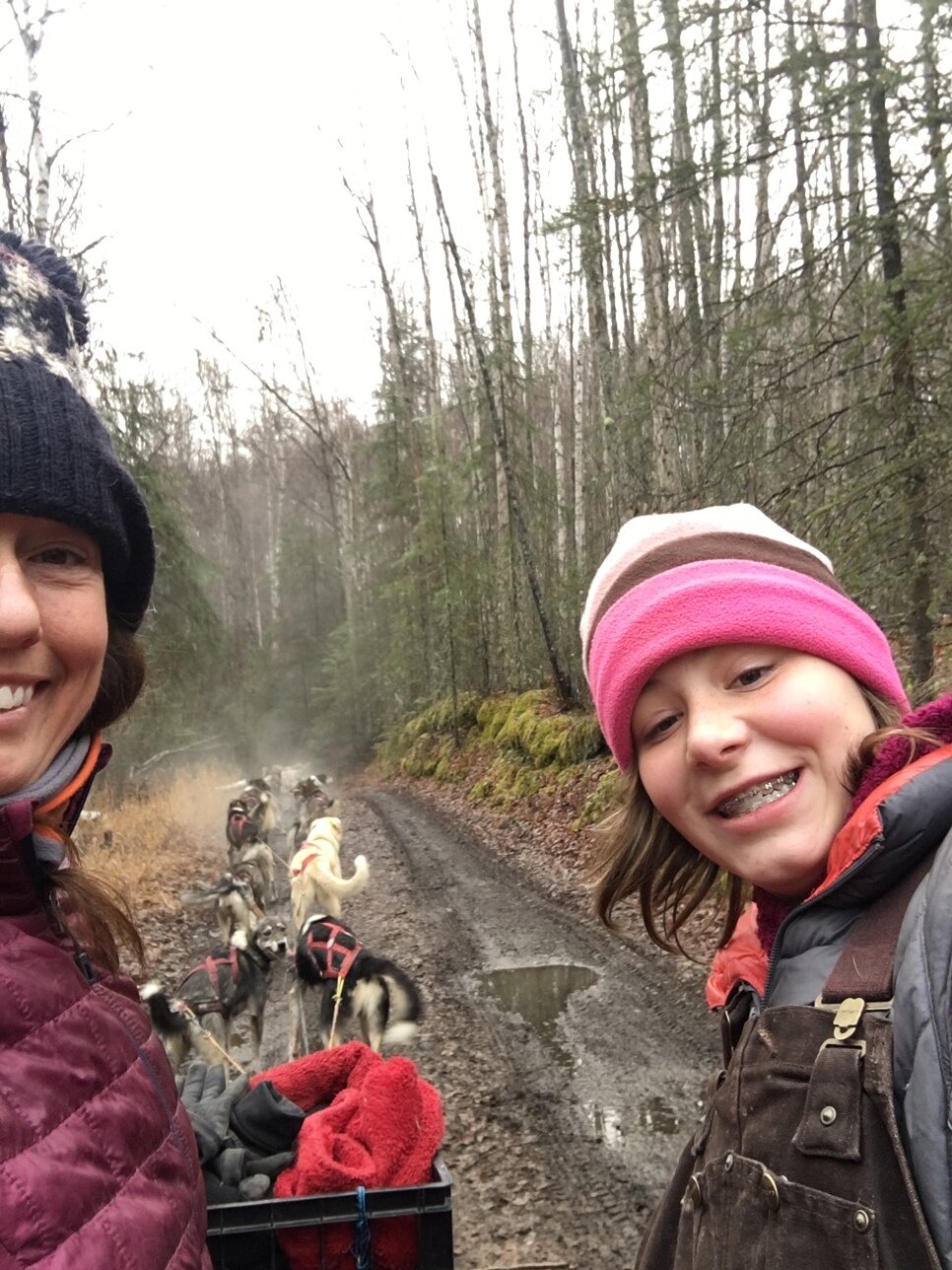
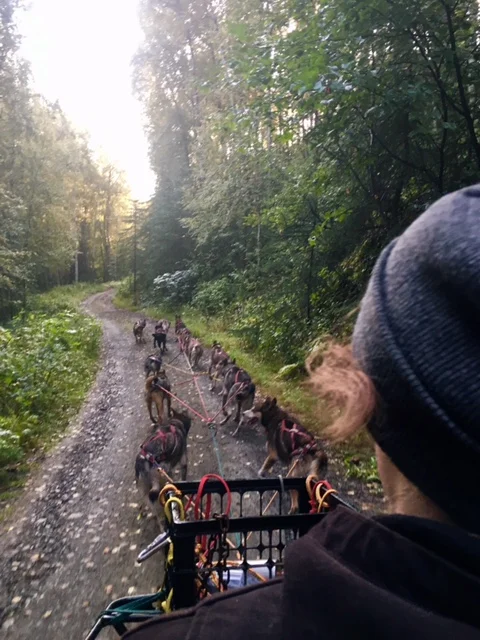
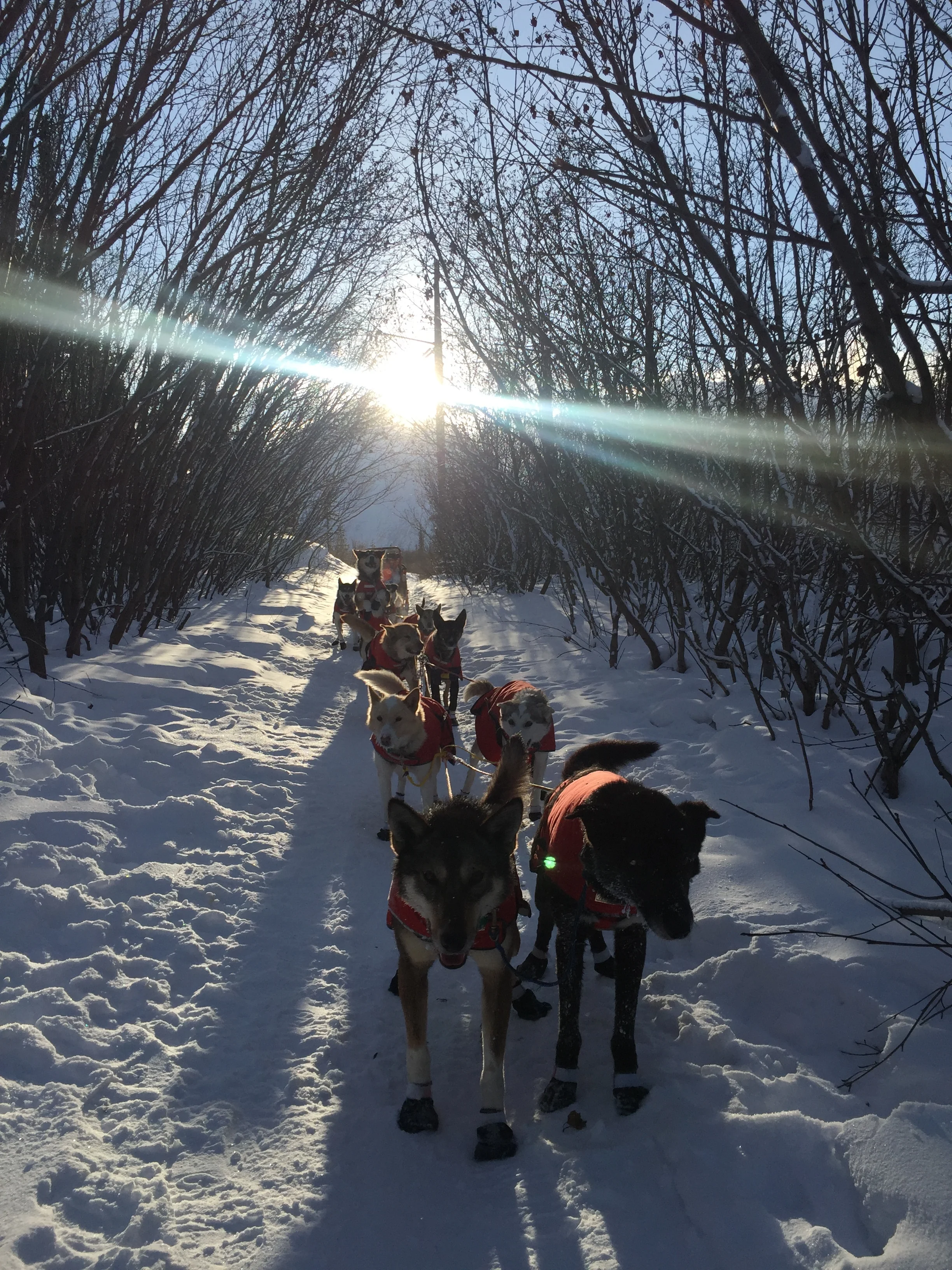
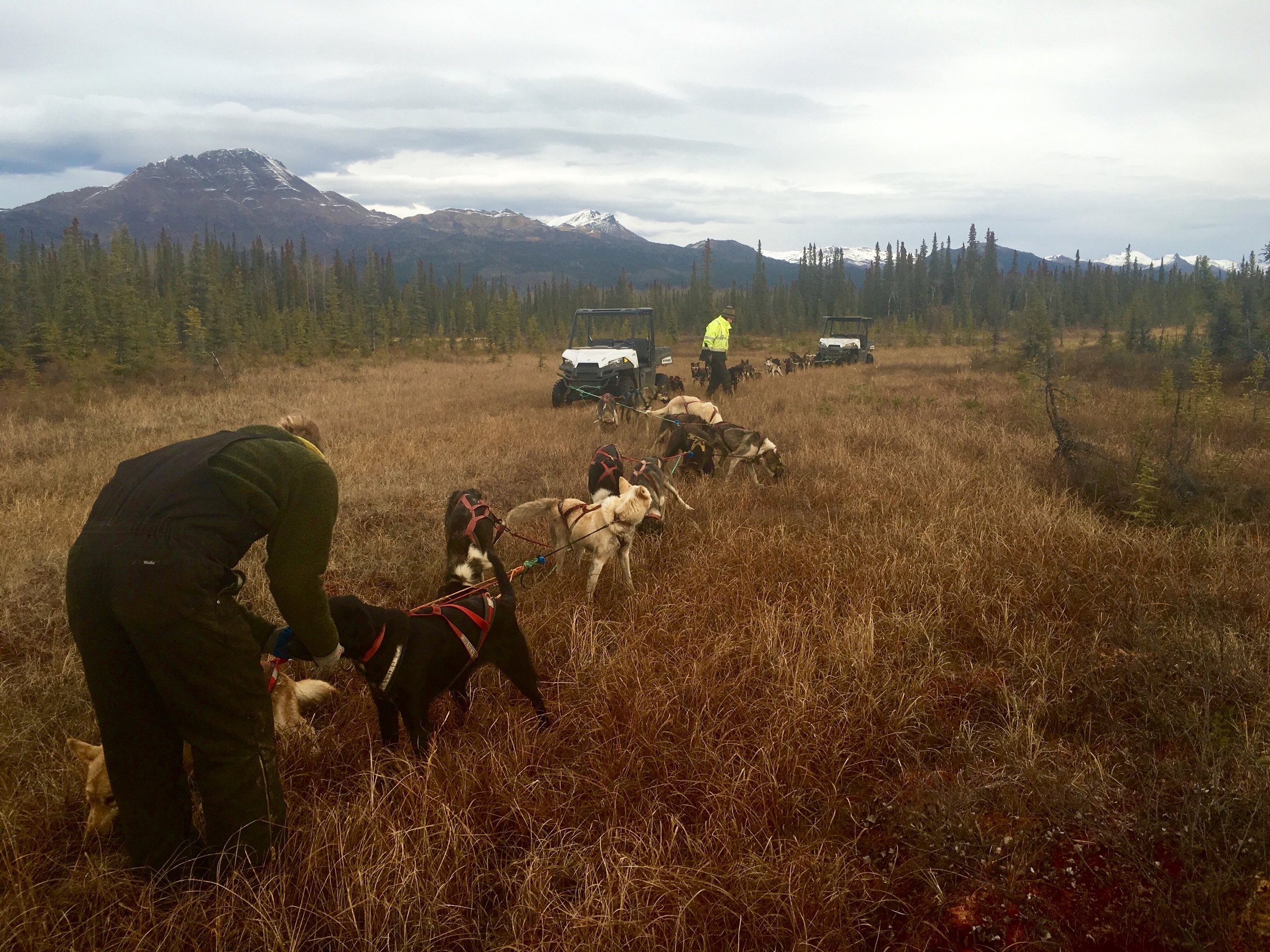
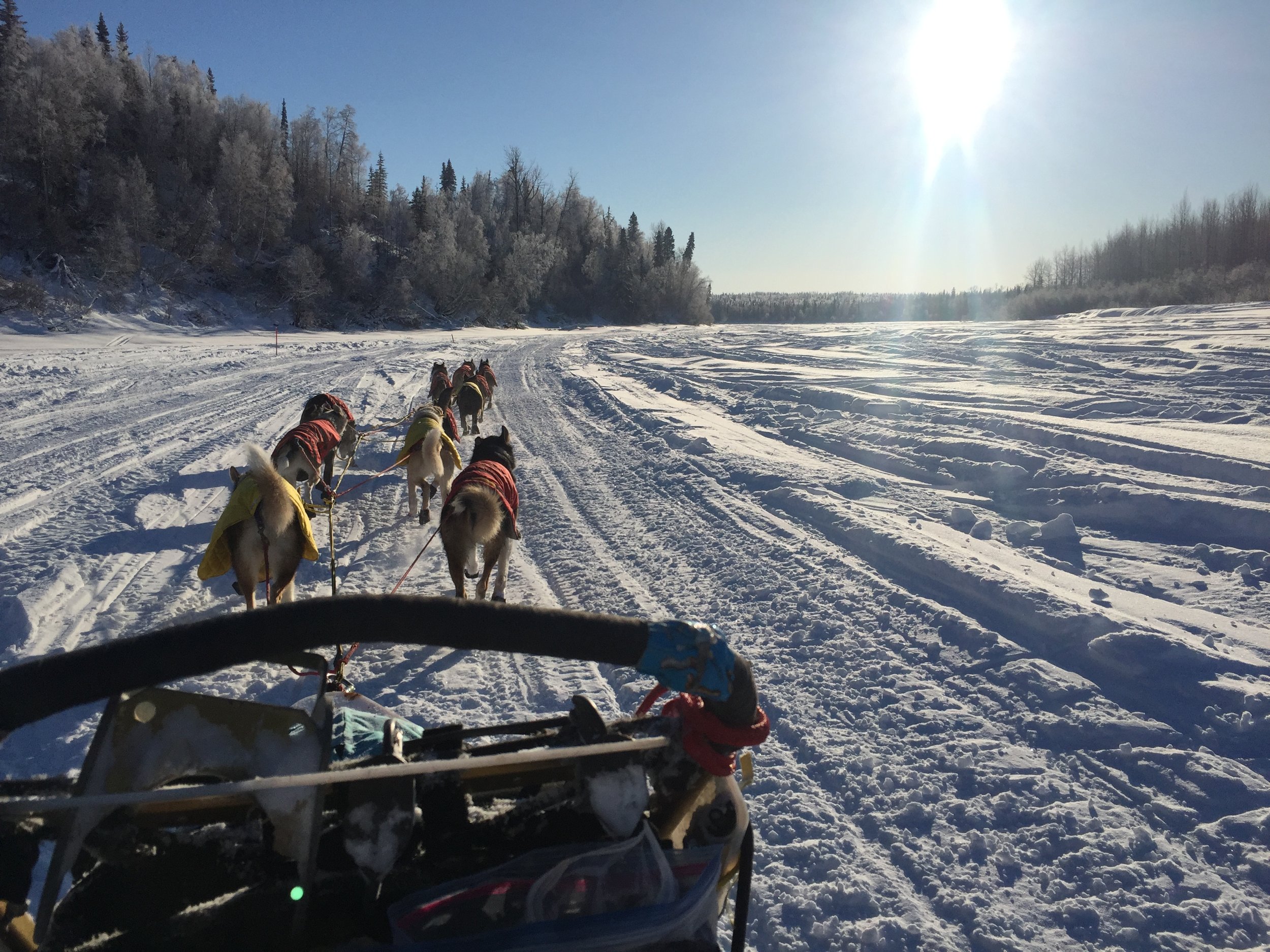
That first day I learned how Kristin feeds and waters her dogs. I learned how to harness a dog. The tricky part is figuring out how to flip the harness if it is inside out in places. I learned that harnesses come in different sizes and each dog wears a certain size harness depending on their size. It is very hard to put a harness on a dog that is jumping and excited. We got to harness up 4 dogs and hook them up to a cart and go out on a run. The cart has three wheels and no engine but it has a brake. For the rest of training in the fall we used a four wheeler. Kristin taught me how to drive the ATV. There was one week where I hooked up a 16 dog team which is the size of an Iditarod team and we brought them out. One of my fall highlights was getting to personally take out six dogs on the ATV by myself.

December 8th

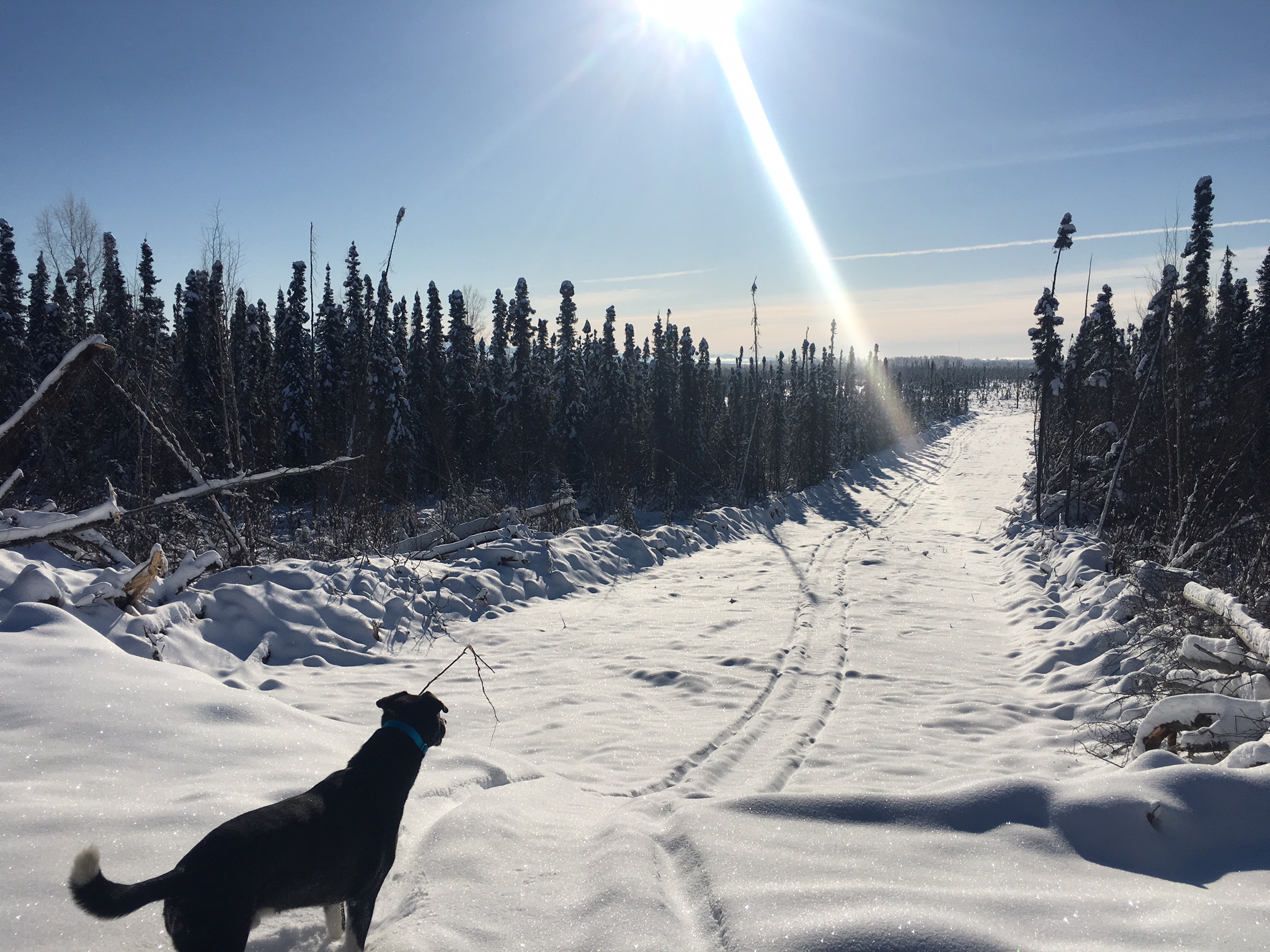
I went out to Kristin’s on December 8. We still don’t have enough snow in Anchorage (or Big Lake) to run dogs (on a sled). We measured the snow depth- we have 7 inches on the ground but if you step on it the snow packs down to 1.5 inches. This is not enough to keep the snow hook in the ground. I learned that your main brake for slowing and stopping a team is a claw break that you step on.

I learned that even though there’s not enough snow on the ground there still more chores to do with dogs. We put a bunch of frozen salmon into big pots and added water to the pot to cook salmon stew for the dogs to eat.

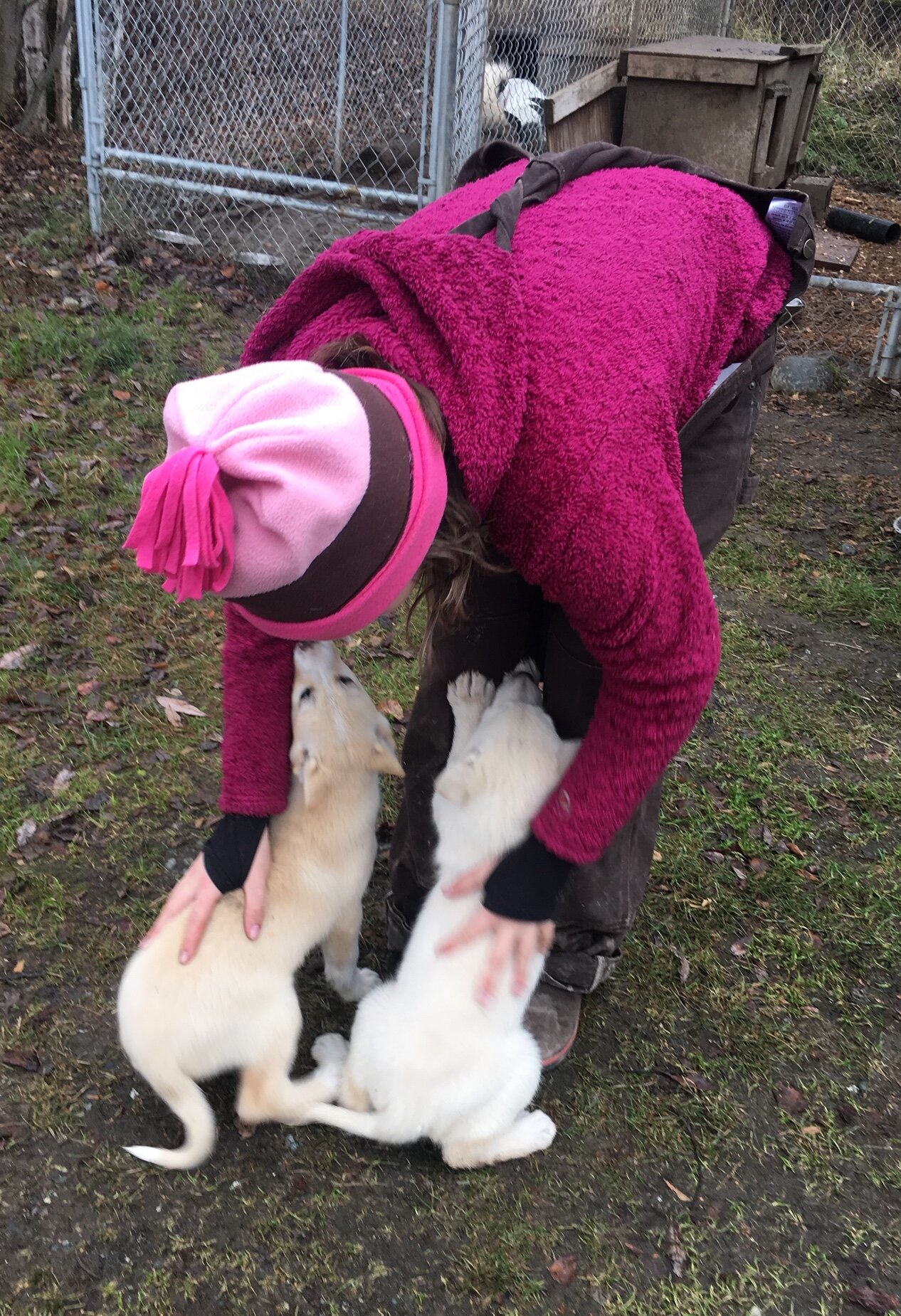
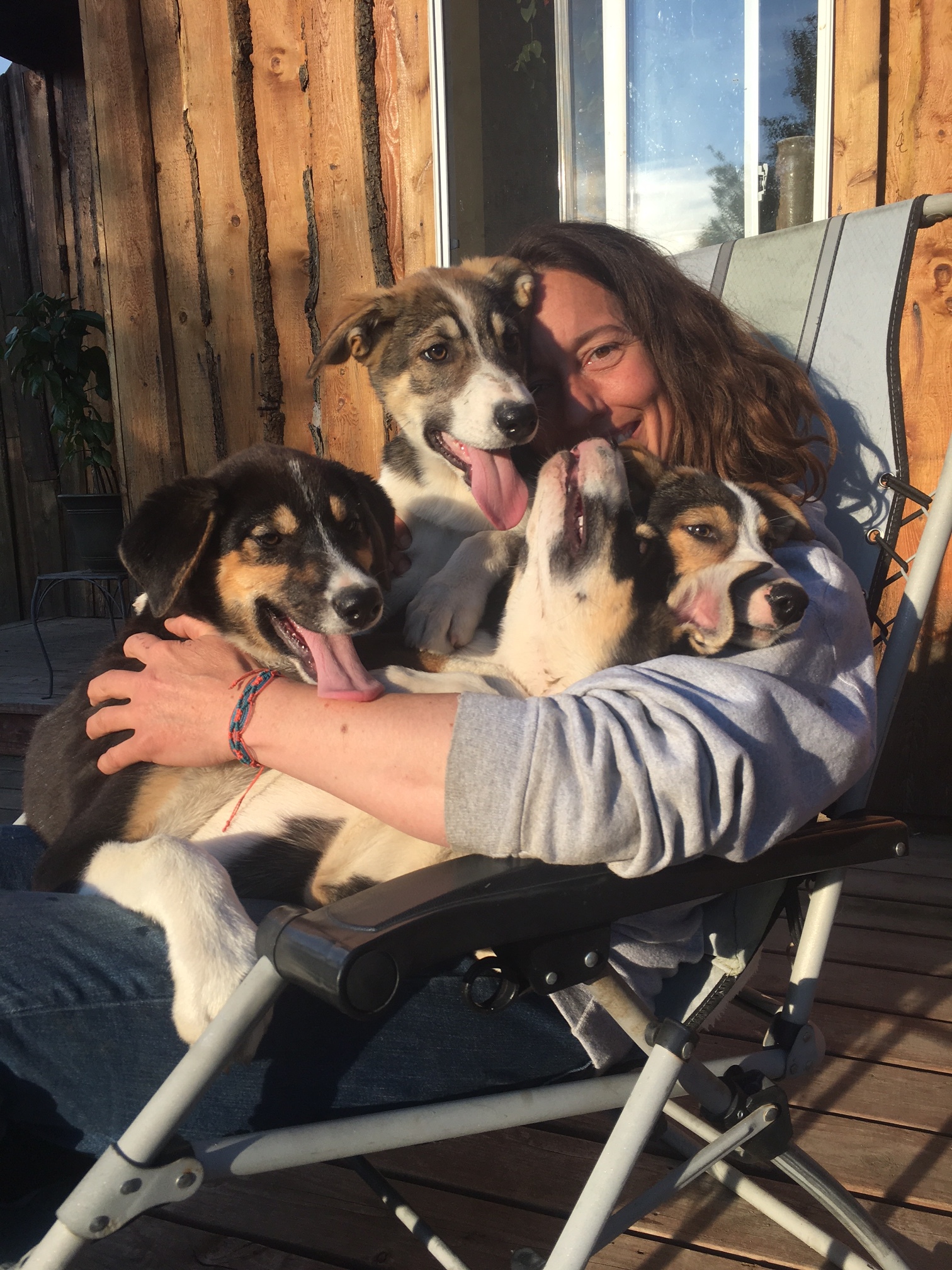
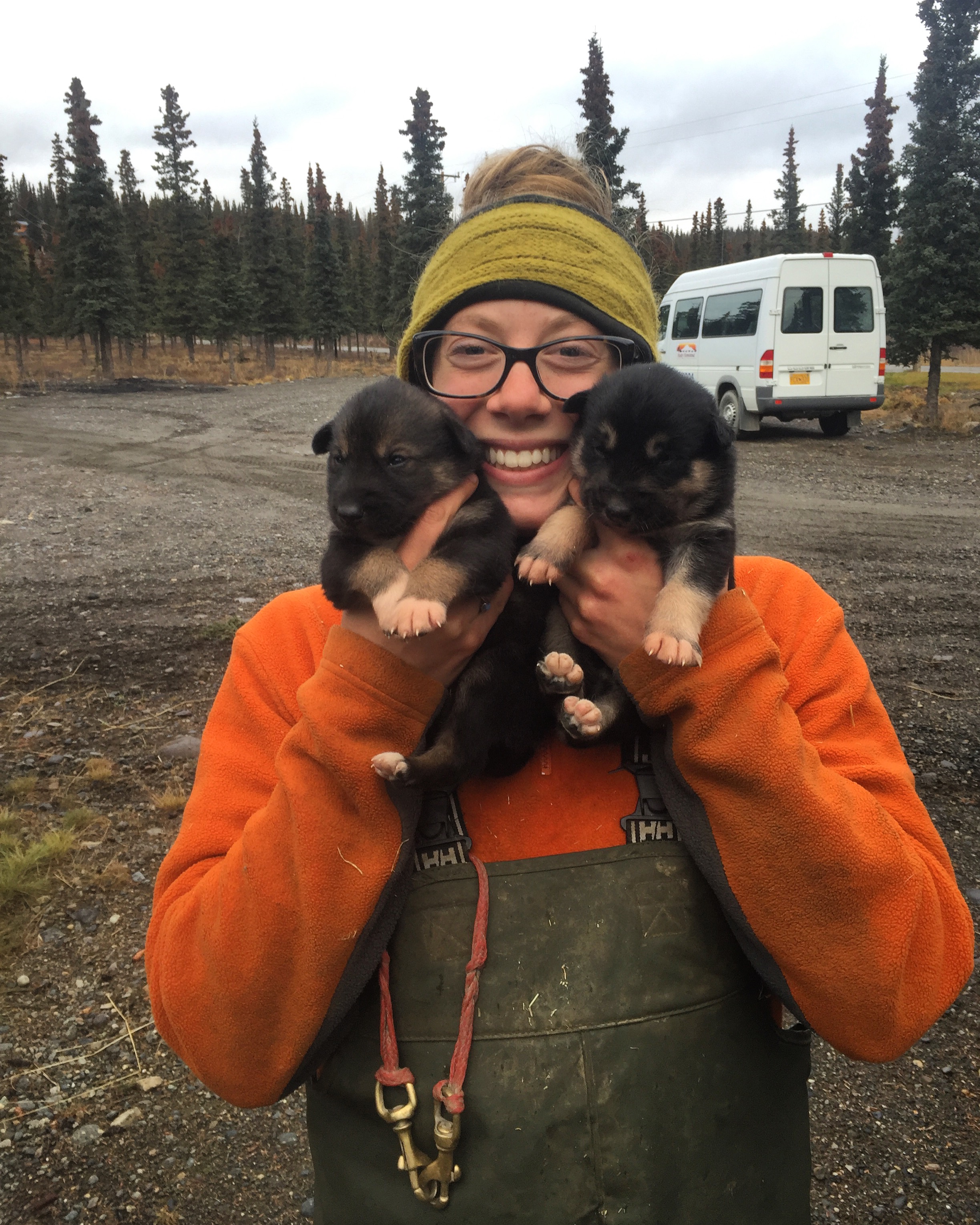
Kristin has 2 puppies that are just over 3 months old. We bring the puppies out on walks- but the puppies are not on leashes so that they can run and explore. It’s good for puppies to spend time with people so that they will want to be by people when they are older. As the puppies get older their training will change. Right now the puppies are learning their names and some basic commands as well as manners. The puppies are Widget and Wrangle and they are both so cute! I learned that when they get a little bit older the puppies will get to try on and wear a collar.

January 26, 2020

Lessons Learned by Annika (14 years old)

  1. Don’t let go of the sled

  2. Make sure you know how to can hold on to sled and do things (untangle dogs, put booties on and do snaps) with the gloves you choose

  3. Make sure you know how to use a snow hook

  4. Always have hand and toe warmers

  5. Always have fun

Lessons Learned by Megan (Annika’s learning-to-mush buddy, not 14 years old ;) )

  1. Put the drag mat down before leaving the yard

  2. Don’t let go of the sled

  3. If dogs aren’t listening, slow down or stop until they listen

  4. Take extra gear with you

  5. Know your dogs

Bacon's Acres' Prayer Flag Project

♥️Prayer Flag Project♥️

It seems like a time when we could all use a little more hope, love & light-heartedness.

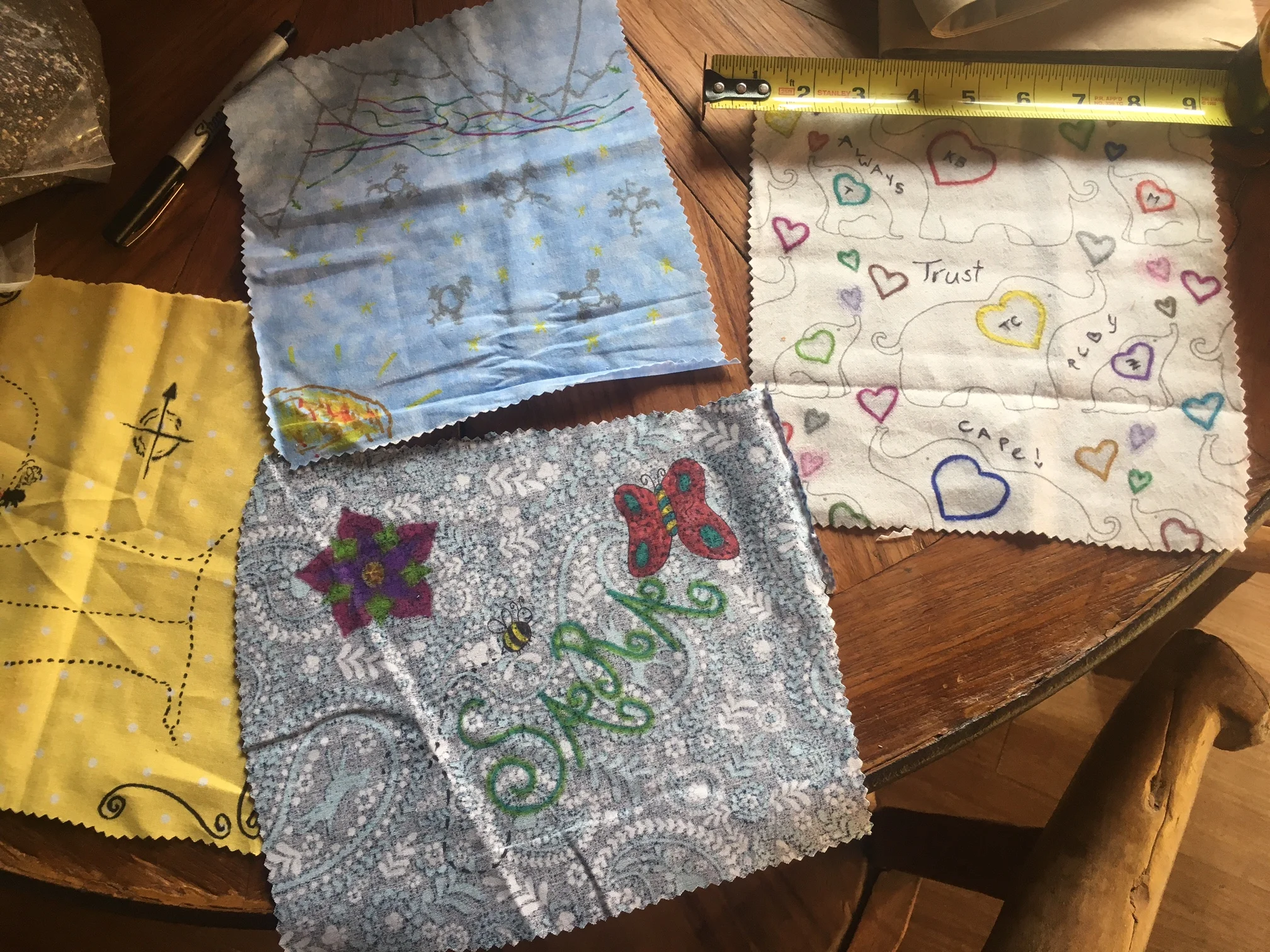
With inspiration from a weekend at Salmonfest with Tara, we decided to gather a big dose of connection, hope, positivity, creativity, love and peace by creating strings of prayer flags at Bacon's Acres from family, friends and fans.

If you'd like to be part of this collective project, you can: 
1. Visit us & create a flag while you're here
2. Find an inspiring fabric scrap (~8"-9") at home & decorate it, if you wish 
3. We can give/mail you some fabric pieces. Contact me if you want us to send you some fabric.

Mail your flag(s) to: 
Kristin Bacon
PO Box 521504
Big Lake, AK 99652

We'll keep you updated on the project. The first four are already dancing!

Thank you, Tara, Cody, Sara & Jarrod 🐾🐾🎉😘

INQUISITIVE KIDS 2019

INQUISITIVE KIDS 2019

It is so much fun to see the “fan mail” pour in from students around the country studying Iditarod, and using aspects of the race to learn math, science, writing, reading, etc. I have combined their questions and my answers from this year’s batch of letters to share with everyone. I have also included some beautiful art by Natalie, Mia, Madeleine, James, Kate and Lindsay.

ENJOY! … and thank you to all the students and teachers who cheered us on!!!!!

Lesson's Learned -- Iditarod 2019

  1. Previous experiences do not necessarily prepare you for what’s next

  2. Perseverance pays off

  3. The superpower of “PAUSE”. You CAN make the train of life, even a dog race, stop in order to rest before continuing on.

  4. Some of our hardest moments in time deliver the clearest messages

  5. There are too many reasons to list regarding why I refer to this Iditarod experience as “a special kind of miserable” … time will tell if we decide to race again in the future. Zero predictions to offer today.

  6. We all pay the same amount of money to enter this race, regardless of how long it takes.

  7. Rain. Be prepared for wet conditions — top to bottom / head to toe

  8. If we race again, we need to do some serious preparation / training for water crossings.

  9. I will never take “Agent Orange” (sled) on another Iditarod. It’s time for a new GATT taildragger. I bought my original GATT sled used from Jake Berkowitz. She did all my qualifiers, many of Tara’s qualifiers, my 1st Iditarod, Tara’s Iditarod… had many tough adventures, had many parts replaced. She’s still my favorite sled to drive, but no longer has sufficient durability for another Iditarod.

Big Change at Bacon's Acres

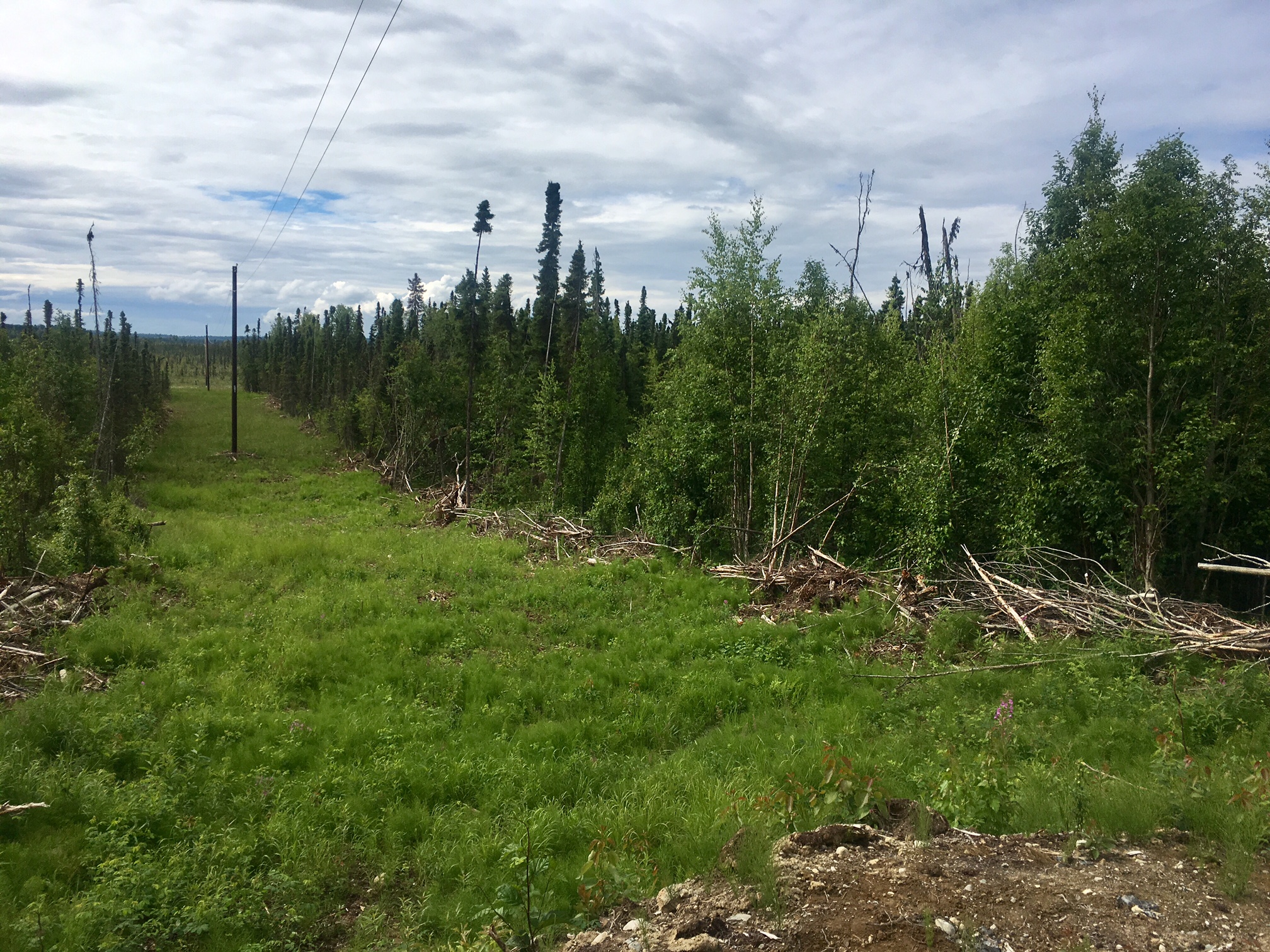
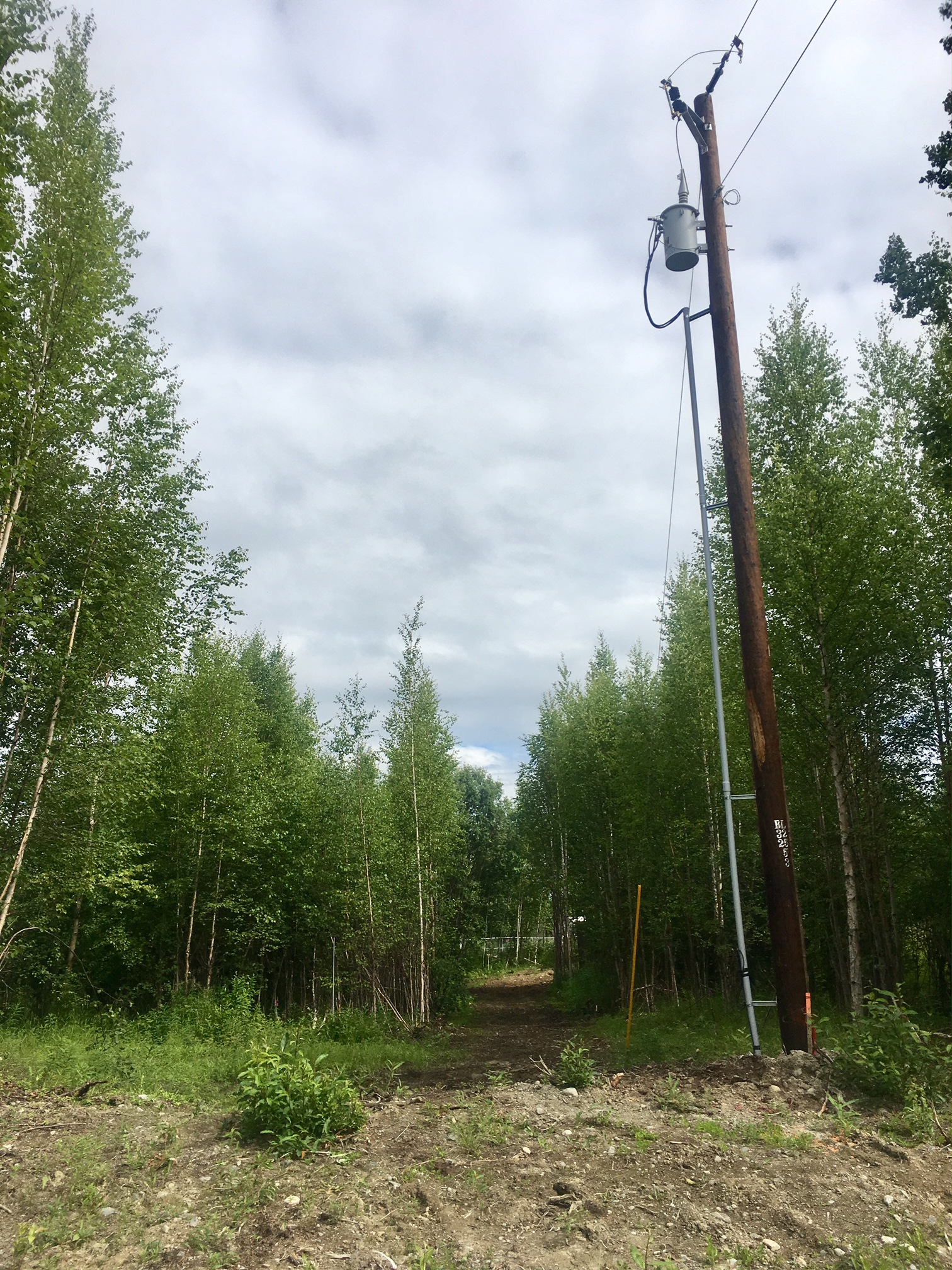
When I moved to Bacon's Acres nearly 8 years ago, I was challenged, proud and entertained by my crash course in learning to live off the grid.  It felt good.  It felt green.  It was all a very new experience for me.  When I lived a simple cabin life (for about 6 months before I started my dog team), it was fabulously simple and peaceful.  It didn't matter if my solar/battery system worked consistently or not.  I didn't have a dog team needing to be fed and watered.  I didn't have ATV's that needed to start so we could do our training runs. I didn't have freezers of meat and fish to feed the dogs. 

After an experience with a couple very nasty freezers and consistently frozen water lines, in 2015 I put in a work order to investigate bringing power to Bacon's Acres.  Somewhere in the decision-making process other life events (as well as timing and finances) trumped such a major project.  Our living structures are nearly 1000' from the main power line, and the power poles must pass through swampy ground.  Also, I waivered on wanting to give up the "simplicity" of off the grid living.  My decision to go back on the grid took an acceptance of the fact that I'm not currently choosing to live a simple life.  Initially, I felt like going back on the grid was "selling my soul".  After much reflection, I decided I was "buying my sanity".

It's amazing all the "little" things all day long that are impacted by consistent power – personally, professionally and as a dog musher!  The hum of the generator is silenced.  I don't have to load up gas cans to buy gas to feed the generator. I don't have to wonder how soon the water holding tank will be empty requiring I start the generator to fill it back up.  My laptop can always be charged.  I don't need to start the generator to scan or print.  Wifi can always be on, if I want.  I can listen to music for as long and as loud as I want.  The dogs' freezers of fish and meat stay frozen without a thought.  I don't have to wonder if plugging in one more freezer will overload the generator when the water pump kicks on while I do laundry.  Most of my wall outlets always work (much less confusing for those folks who aren't used to a 12-volt vs standard outlet option).   When it's colder than 20F, I don't have to drag generators in/out of the cabin to keep them warm (if they get too cold sometimes they won't start), or trip over them in my kitchen.  I don't have to drive generators to the Honda shop to get them fixed on a regular basis.  I have lights bright enough to see my meal prep and dish washing -- no more headlamps required.  I can plug in my truck in the winter, as well as trickle charge my ATVs.  I can run heat trace on my water lines more consistently, so they don't freeze.  I could go on & on...  

We continue to use our solar panels and batteries, but now have the convenience of consistent power to use as needed.  An instantaneous elimination of an abundance of mind clutter.   Here's a huge thank you to all of you who helped make this process happen!!!  

Rainy Pass... Check

Rainy Pass.jpg

Rainy Pass, we're here! In our Buy A Mile program, that is. Thank you so much to everyone who has helped us to get to this point!! Check out the blurb below for information on the trail from Finger Lake to Rainy Pass, courtesy of Iditarod.com:

"This is a tough run with some short stretches of extraordinarily difficult trail. If the musher didn’t blow on through early in the morning, they should try to leave Finger Lake by three or four in the afternoon so there's some daylight left for the worst parts. (It can be done in the dark, but it isn’t recommended unless you know what you’re doing.) Figure three to five hours for the run. One might consider latching the drag up and out of the way before leaving the checkpoint, and plan on using the brake only. There are often all kinds of things poking up out of the trail.

After leaving Finger Lake, the trail climbs steeply over a ridge to Red Lake, runs along it for a mile or two, swings up a ravine, and then follows a series of climbing wooded shelves interspersed with open swamps. About ten miles from Finger Lake, the trail drops down a series of wooded benches toward Happy River, then onto the river itself via the dreaded Happy River steps. Then it’s down the river to its mouth, up the Skwentna River for a few hundred yards, and back up a steep ravine to the plateau on the south side of the Happy. The trail will cross Shirley Lake, then Long Lake (11 miles from Rainy Pass Lodge) and then run along the steeply sloping mountainside above the south side of the Happy River valley to the checkpoint. There are two nasty stretches of sidehill trail in the last eight miles."

We are currently just ten miles from our next checkpoint: Rohn! We look forward to seeing you there ;) 


Photo courtesy of Iditarod.edu

Third Checkpoint's the Charm!: Finger Lake

Finger Lake Sunset.jpg

Buy-A-Mile has officially reached the third Iditarod checkpoint, Finger Lake! We can't thank everyone enough for helping us get to where we are now, and supporting us in where we are going (Rainy Pass is up next!) Read on to find out more about Finger Lake and the preceding trail from Skwentna (courtesy of Iditarod.edu): 

"The distance from Skwentna to Finger Lake, population 2, is 45 miles. Roughly, it’ll take four to six hours to cover the mostly uphill route but the trail isn’t too tough. The teams will run across rivers, lakes, swamps and wooded areas.

Finger Lake is a tent checkpoint that’s located at the eastern edge of the Alaska Range in snow country. It’s not unusual to have TEN FEET of snow on the ground! Lots of humans fly out to Finger Lake to watch the race. Kirsten and Karl Dixon who run Winter Lake Lodge provide hospitality for Iditarod spectators. The real name of the lake is Winter Lake, but the lake is shaped like a two-mile long finger so many old timers and for Iditarod, the checkpoint is known as Finger Lake.

Winter Lake Lodge is a luxury summer lodge. Folks go there for wellness, cooking classes, hiking, fishing, kayaking, rafting, mountain biking and dog mushing. There are lots of birds, flowers and berries that are rare to other places. 

Action picks up at Finger Lake/Winter Lake Lodge early on the second day of the race and because it’s early in the race, the action is intense. Teams arrive in a steady stream, one right after the other. Most teams stay and rest during the “heat of the day.” Mushers have to carry enough food with them from Skwentna to feed their dogs at Finger Lake, as there are no musher bags flown out to Finger Lake. Dogs are very happy to eat a tasty meal and then snooze while the temperature tops out in the early afternoon."

We're looking forward to racing on toward Rainy Pass, the fourth Iditarod checkpoint!! 

Photo courtesy of Iditarod.edu

Skwentna Sweeties: We Made It... and Tara and Team are on their way!!!

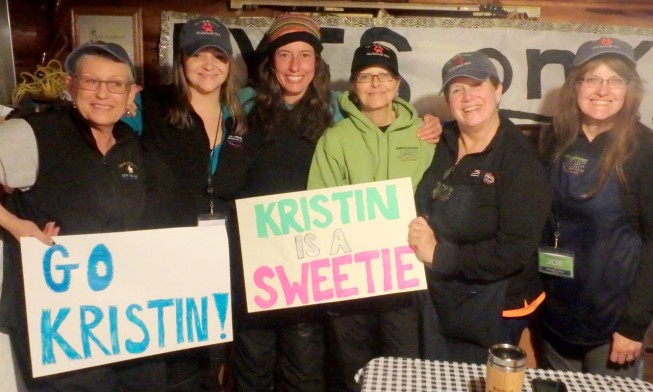
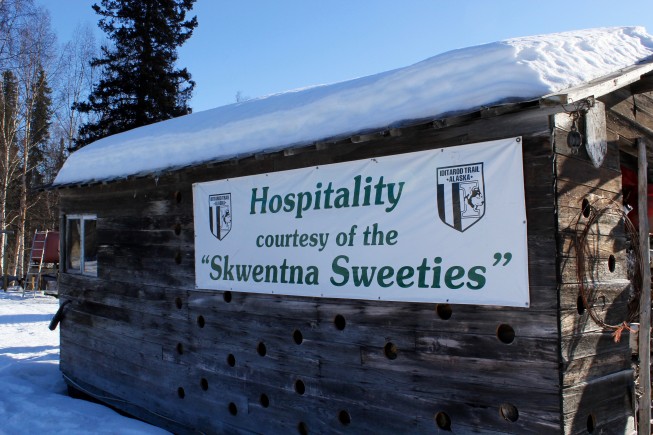
Before Kristin's first Iditarod journey as a musher, she was a Skwentna Sweetie for 10 years. The Sweeties and Darlings are groups of dedicated individuals who staff Iditarod's Skwentna checkpoint at the Dehlia's homestead each year.  These volunteers make the Skwentna checkpoint a home away from home for its volunteers, race officials and mushers. It was here, in Skwentna in March of 2011, where Kristin was introduced to Ryan Redington, who later sold her the mother of her first litter of pups (Libby).

Our Buy-A-Mile program has made it to Skwentna, and we are now working our way toward Finger Lake, the third checkpoint on the trail. The following description tells a bit about the trail between Yentna and Skwentna, as well as Skwentna as a checkpoint (courtesy of Iditarod.edu):

The distance from Yentna Station to the second checkpoint, Skwentna is 34 miles. These are easy miles for the mushers and dog teams as the trail follows the Yentna River until joining the Skwentna River a couple of miles short of the checkpoint.

Skwentna checkpoint is located on the Skwentna River at the Post Office and the home of Joe and Norma Delia. Joe has been the postmaster in Skwentna since 1948. Skwentna has a population of 75 in the winter and about 250 during the summer. There aren’t enough children in the area to have a school so the kids who live there are home schooled. Folks come to the post office by snowmachine, plane or dog team in the winter and boat in the summer. Average rainfall per year is 27 inches and average snowfall is 118 inches. In January, the Delias experience temperatures from 30° below to 33° above and in July the thermometer can dip to the lower 40’s soar to the mid 80’s. Athabascan Indians have fished and hunted along the Yentna and Skwentna Rivers for centuries.

You can’t believe how exciting and noisy it is to have all the Iditarod teams come through a checkpoint in just 12 hours. As the race goes further down the trail, it spreads out but in the early checkpoints like Yentna Station, Skwentna, Finger Lake and Rainy Pass, all the teams are still pretty close together.

There are about 40 or more people who come together to make things happen at Skwentna. The River Crew comes in from Tacoma, Washington. They lay out straw bales, sort food, heat water, park teams and act as checkers. The Skwentna Sweeties come from Eagle River, Alaska [and other locations]. They provide hospitality by cooking great meals for all the workers and the mushers. There are five or six veterinarians, a race judge, a race marshal and a handful of communications people.

Many thanks to all those who have helped us get to both Yentna and Skwentna. We’re looking forward to many more adventures as we work our way toward Finger Lake!!


Photos courtesy of:

http://iditarod.com/celebration-of-life-and-tribute-to-cyndy-fritts/

https://itcteacheronthetrail.com/2016/03/08/thank-you-skwentna/

First Checkpoint Reached: Yentna

The kick-off for our Buy-A-Mile program is off to a running start! We have made it to and past the first Iditarod checkpoint, Yentna, at Mile 42 (we are currently at Mile 55!)

Here is some information on Yentna as a checkpoint as well as the trail from Willow to Yentna, courtesy of Iditarod.edu:

The distance from the Willow restart to the first checkpoint, Yentna Station is 42 miles. These are easy miles for the mushers and dog teams as most are on frozen rivers or well traveled snowmachine trails. Most of the traffic at Yentna Station goes straight on through, stopping just long enough to check in and pick up supplies.

Officially, this checkpoint is known as the Yentna Station Roadhouse. The nearest road is more than 40 miles away! The only way to travel to Yentna in the winter is by plane, snowmachine or dog team. In summer you can add boat because the checkpoint is located on the Yentna River.

Roadhouses are quite significant in Alaskan history. They are like hotels that were built along trails used by miners, mail carriers, loggers and anyone else who had to travel along wilderness trails. They were generally built a “day’s travel” apart. Some were permanent wood structures while others were just temporary tents. Some were quite nice while others just provided shelter and a meal. The Yentna Station Roadhouse doesn’t date back to the gold rush days or when mail was delivered by dog team, but it has a rich and colorful history.

Dan Gabryszak saw the potential of a piece of land across the river from his moose hunting grounds.  It was a dream that would and still requires enormous perseverance and patience.  The land became available through a public land distribution program.  The stakes Dan and his wife, Jean, placed on the land in 1981 eventually became their home and business as well as roadhouse and back country lodge for adventurers, sports enthusiasts and travelers.  The Gabryszaks have endured through some very lean and hungry years.

Some thirty years later and still run by the Gabryszak family, the Yentna Station Roadhouse, oasis for all, is open twenty-four hours a day, seven days a week, year round.  The roadhouse is a large permanent structure flanked by several A-frame cabins. Services offered include meals, rooms and guides for folks who want to fish, hunt, follow Iditarod, work or travel in the area. It’s not only the first checkpoint for Iditarod, it’s also a checkpoint for Junior Iditarod, Iditasport, Alaska Ultra Sport, and the Iron Dog Race. Iditarsport and Ultra Sport are both human powered endurance races where people bike, ski, run or snowshoe anywhere from 130 to 1100 miles.

Thank you SO MUCH to all those who have sponsored miles thus far! Were excited to continue the Buy-A-Mile journey onward to one of our favorite checkpoints- Skwentna :) 


Photos courtesy of: 

http://www.alaskaultrasport.com/route_description.html and http://iditarod.nyrakymsamaljankan.com/?cat=13

The Season Ahead... What I CAN Tell You

It is obvious to know what the team will be focusing on this season:  training for and racing Iditarod 2018.  Tara, my friend and handler, will have the main spotlight, as we signed her up for The Last Great Race in June at the Iditarod picnic.  

Many people have been asking if I am running Iditarod, Yukon Quest or other smaller races this year.  Good question!  This doggy lifestyle was a dream that was delivered from my soul more than 14 years ago.  And in 2011, I decided to make my dream come true.  Over the past 6 years, a large part of my heart, soul, time, energy and finances have been poured into my goal of "I want to run Iditarod someday".  My team has now successfully finished every race we've started, including two Iditarods (2016 & 2017).   This makes my heart and soul shine!  I'm very proud of my loving and hard-working team. 

In an honest effort to honor my best self, last fall I committed to not running Iditarod in 2018.  Because Tara had done so great with the dogs throughout last season, I offered Tara the opportunity to run Iditarod 2018 with my team (I have a small kennel = one team).   We are psyched to have Tara back full-time at Bacon's Acres starting mid-September!

I am eager to have more of a mentor and handler role this season, which will allow me to follow Iditarod with a very different, more experienced perspective.  I feel it will provide an opportunity for valuable insight into future training and racing.  It will also allow me some extra time, energy and freedom to re-balance my life.  Already, this summer has been filled with activities which will allow my team and I to thrive as we move forward in life.  

Thank you for continuing to love and support our team!  It wouldn't be nearly as fun without being able to share the excitement with you. 

To answer your question about "What (else) will you be doing this winter?" ... we'll keep you posted.  :)


IDITA-Countdown: 236 Days

Here we are just two weeks past sign-ups, and it still is SUCH a surreal feeling to me!! I remember walking up to the happy yellow tent (my favorite color!) to hand in my paperwork and entry fee. And by remember, I pretty much blacked out on my way there. My stomach was in knots, I was giddy with excitement, and though I walked back to the parking lot twice, it was only after the picnic that I realized I had walked that same route four times.

It is truly amazing how things evolve over the course of a year. Last year at this time you would’ve found me reaching out to Kristin, hoping she’d say ‘yes’ to me as her handler. We chatted of experiences I had and didn’t have, work I knew and work I could learn, and things I would do and things I wouldn’t do (at least not yet). Over the course of last July, conversations took place that brought me back to the world of sled dogs. The possibility of me running ONE qualifier was part of the conversation.

Fall came and went, and many training runs and puppy cuddles went by. Before we knew it, race season was upon us. We agreed the Willow 300 would be the qualifying race I would run. In case the Willow was cancelled, I filled out paperwork for another race, the Tustumena 200. As the heavens would have it, neither race was cancelled, and my paperwork and entry for both races was set: one qualifying race became two.

If I finished both races, I would then be qualified to run Iditarod (with one qualifier from 2015 complete), a far off thought at that point in time. But not too far off. Back-to-back race weekends tested and taught me lots I didn’t know. Knife 101 (where I learn DO NOT to lose the knife in the snow), Cooker 105 (where I learn DO NOT drop the matches in the snow either, or store the lighter in anything that isn’t the pocket next to your body), and countless more do's and don’ts in between. I learned there was SO much more to learn, and that I was just getting started. I also learned Kristin wasn’t going to run Iditarod in 2018. And with those finishes, the possibility of me running it started to become a reality.

Fast-forward through many emails and phone calls to get race reports in and paperwork done, a picnic and a nice entry fee later, and here we are! A year from where those first conversations took place, early July 2016. And I am signed up to run Iditarod 2018!!! You never know what can happen in a year :) 

What do ELSE do we do besides run dogs??

Well, there’s a whole BUNCH of things, especially in the midst of race season! And not just during race season. There is always something to be done around the dog yard, in any season, but prepping for races is definitely busiest.

Besides training the dogs for trekking long distances, we have to prep all the things we need for those long treks. These things include dog food, gear, and snacks, and people food, gear and snacks. Easier said than done, we can assure you! Not only knowing WHAT we need, but HOW MUCH; these are pivotal questions that dictate how we plan our races, and pack our drop bags.

Drop bags: these are the large- upwards of fifty pound- bags that we send to checkpoints during a race. As we race, we stop at checkpoints to gear up and fuel up, with the contents of drop bags.

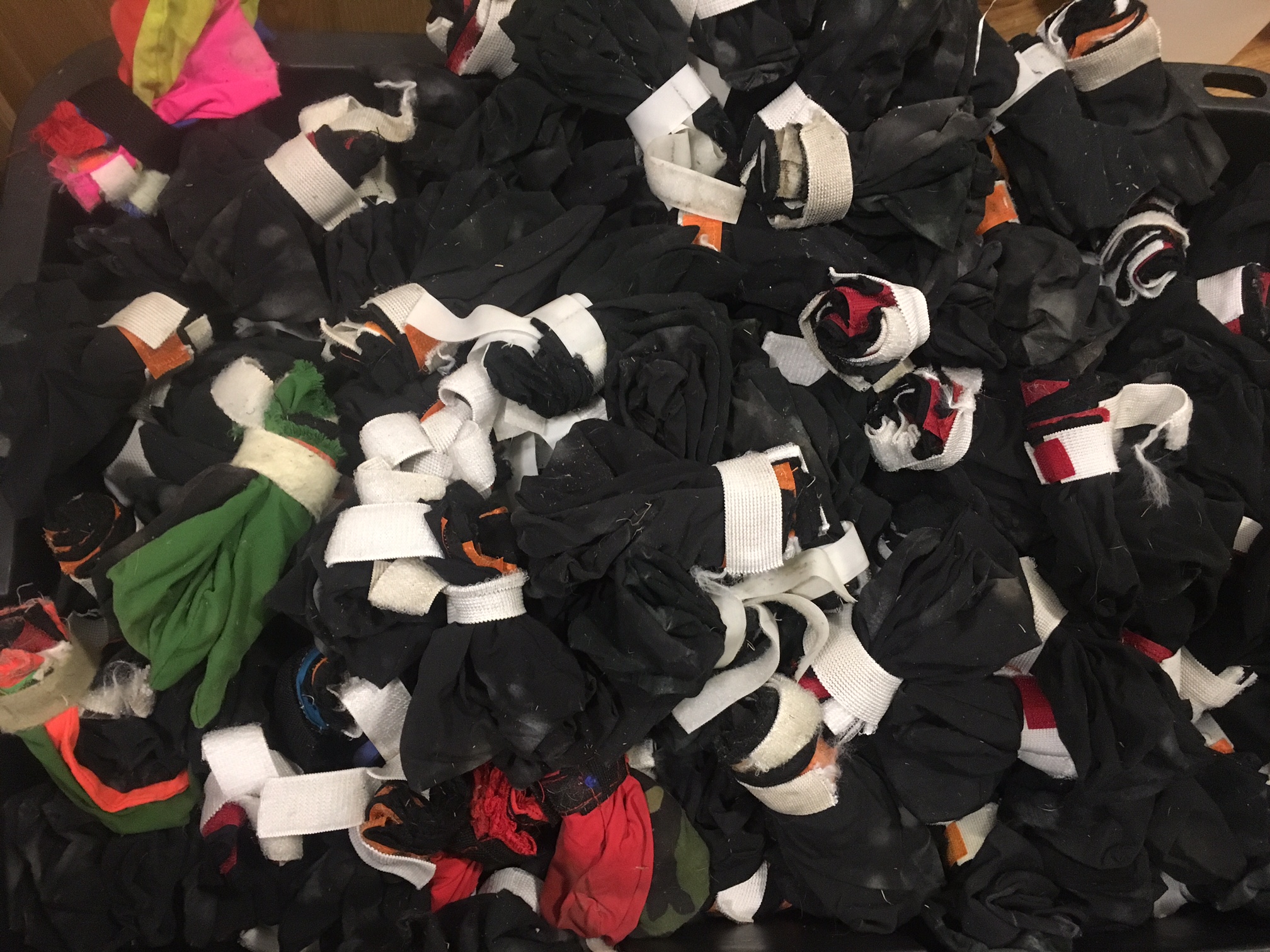
All those little booties the dogs wear? Someone has to wrap them into bunches of 4 (one per puppy paw!). All those tug and neck lines that attach dogs to the main line? Someone has to make those and put snaps on the end. All those small pieces of fish, meat and fat the dogs eat as snacks? Someone has to cut all those up.  The list goes on and on. All these small tasks add up to the big picture, which allows us to do what we love to do- run dogs!

FullSizeRender.jpg

Public Radio Interview / Article by Zachariah Hughes "Adventure is the Profit..."

Here's a nice little interview done in Denali at Husky Homestead which includes Tara, Sean and Kristin talking about handling and race preparation:

http://www.alaskapublic.org/2017/02/16/adventure-is-the-profit-the-economics-of-dog-handling/

(I'm sorry, I'm not techie enough yet to figure out how to click on the link and activate it.  You'll have to copy and paste it into your web browser).  
Iditarod Re-Start Moved to Fairbanks

Today brought the announcement that Iditarod would re-start in Fairbanks on March 6th (about 360 miles from Anchorage where the ceremonial start will happen on March 4th).  Typically, it would re-start in Willow about 70 miles from Anchorage on March 5th.  Here is the full article, if you are interested:  https://www.adn.com/outdoors-adventure/iditarod/2017/02/01/low-snow-in-rainy-pass-and-dalzell-gorge-could-mean-an-iditarod-restart-in-fairbanks/
As a one time veteran finisher of Iditarod, the trail would be partially new for me either way.  I'm a mix of emotions.... curious, excited, disappointed, nervous, etc.  We will make the best of this new trail, and are relieved to know Iditarod made a decision in the best interest of the safety of dogs, sleds and humans.   Ready or not, here we come!


IDITAROD 2016 SUPER SISSYHEAD (movie produced by Katherine Updegraff)

I have yet to come up with a profound statement in summary of this year's grand Iditarod adventure. The whole experience was so huge, so deep... it touched parts of my soul I had never experienced.   I felt a level of joy I never knew possible:  a summation of my years of time, emotion, energy and finances blossoming into a dream come true, as well as experiencing the overwhelming love and generosity of time, energy and financial support from my family, friends and race volunteers that made it possible and so much more enjoyable. It also resulted in a deepened bond with my dogs and an eye-opening new level of respect for my team who happily trotted along for 1000 miles on this crazy adventure.

A heart-felt thank you to ALL OF YOU who contributed to our success this past season!!!  

This movie, IDITAROD 2016 SUPER SISSYHEAD, was given to me by my sister this week.  It is simply perfect!  It celebrates the successful adventure, the dogs, our friends and family, the race volunteers and Alaska's beauty. I feel very grateful to have had the privilege to participate in THE LAST GREAT RACE (www.iditarod.com).   And, I am so thankful to my Sissyhead, one of our biggest fans, for compiling all these photos and creating this incredible movie.  Finally, I want to thank everyone who contributed photos to the movie.  Enjoy!!


thank you to our 2015-2016 sponsors (click on the words below):


Inquisitive Kids

It was very fun to come home to a pile of fan mail from students across the country.  As with our adult fans, the children have some really great questions.  I thought I'd share the questions and answers with all of you. Photos above by Katherine Updegraff, Kristie Lent and Evelyn.

1. What are some of your favorite things about Alaska?  The amazing, natural beauty and diverse wildlife (soon the sandhill cranes will return!).  Many unique and opportunities for work and play.  The special, talented and loving people scattered throughout the state.

2. Why did you start mushing and why do you love it?  I started mushing because I realized I loved the dogs and taking care of them.  In 1999, I was presented with the opportunity to care for a mentoring doctor's team of 16 dogs while he went on vacation with his wife for 2 weeks.  I enjoyed the experience so much I helped with his team for the next 5 years while they went on vacation.  He took me for a few short dog sled rides, but I never drove a sled for several more years.

3. What happened to the four dogs you "lost" in the race?  I assure you none of my dogs were "LOST" during the race.  They were looked after and cared for 24 hours a day.   Four of my dogs had small injuries or appeared tired at some point during the nearly 13 days I was racing, so I sent them home to rest and recover.   They were all happy to see me and feeling fantastic by the time I got home after the race. 

4. What year did Mama Libby have her puppies?  May 2011

5. Are the puppies going to be in the race this year? Libby and 4 of her puppies started the race with me: Miyuki, Zumi, Eewa and Yama

6. How long have you been mushing?  I consider my starting point of mushing when I spent a week with Bill Cotter in Nenana, Alaska doing a dog sledding intensive (dog mushing school).  I told Bill at the beginning of the week I was having a litter of sled dog puppies in May, and wanted to feel safe and competent hooking up a small dog team to start practicing.  Many people work as a dog handler for an experienced dog musher to learn how to train and race sled dogs.  However, because I had my physical therapy job with commitments to school district and local children for home-based therapy, I decided it was best for me to learn dog mushing at my pace on my schedule.   I learned an abundance of important information from Bill during that week, and worked up to an 8 dog team for 50 miles (following Bill and his team).  I was so exhausted after that first 50 mile run I had a hard time counting the correct number of bones (treats) to give to the dogs in our teams when we got home.  

After that week, Bill continued to be a valuable resource, as well as Ryan Redington, Jake Berkowitz and Jeff King.  Their patience in answering my questions has been invaluable to my learning curve.  I think of them often while on the trail, and am grateful for their guidance. 

7. What are the names of your new puppies?  I only have one puppy right now.  Her name is Lil Bear.  Barnum and Zig owned by Jeff King are her parents.  We have high hopes for her!  :)

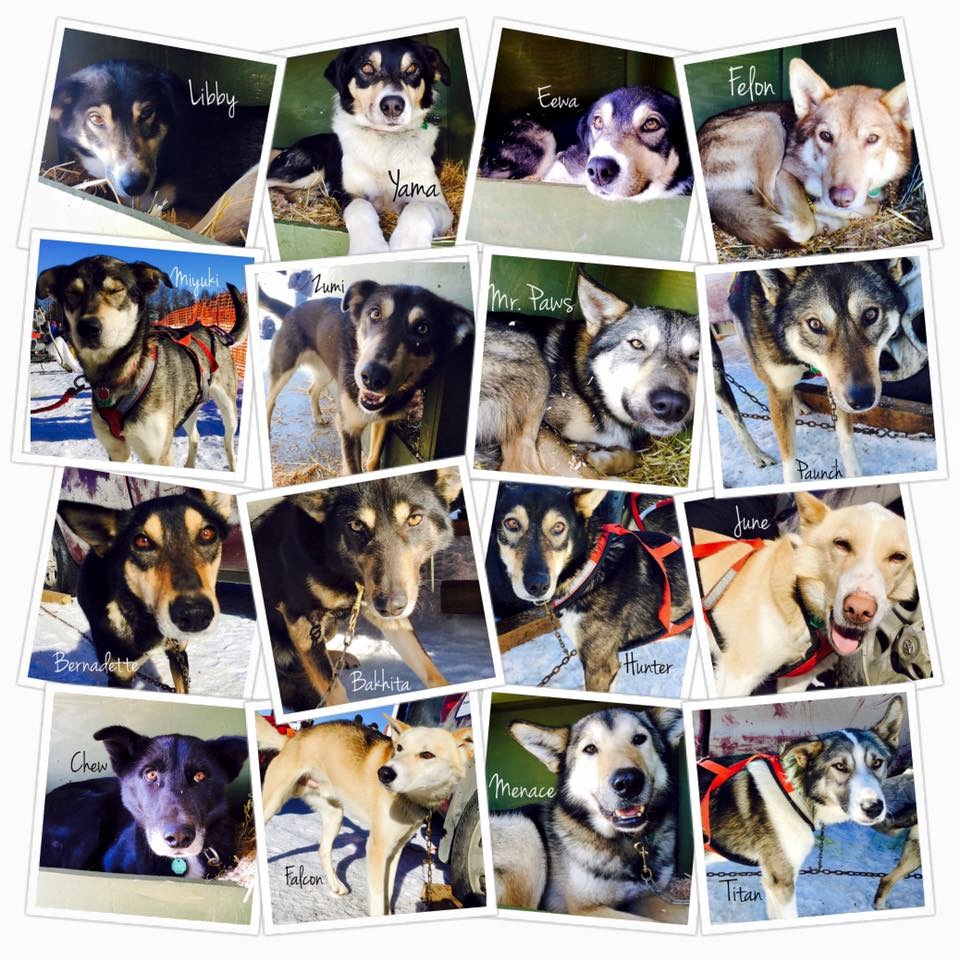
8. What is your lead dog's name?   Felon is his name, and he is posing in the photo above with me.  This year I also borrowed four other lead dogs to help Felon: Falcon, Chew, Bahkita, and Bernadette.  Libby and Hunter also helped out.  1000 miles is a really long way for one dog to be in lead for the whole race. 

9. What are the names of the dogs on your Iditarod team?  There is a collage above that has a photo and name of all of the dogs that started Iditarod 2016.

10. What is in the large bags that you pick up at each checkpoint?  Those big, white bags are called "Drop Bags".  There is always dog food (kibble, meat snacks and fish snacks).  There is also a personal bag of snacks and drinks for the musher. I also put hand and toe warmers in my personal bag.  I often packed a ziplock with a dry Buff, drive gloves and a dry hat. Sometimes there is extra plastic for the bottom of the sled.  In the bags for Takotna, where I took my 24 hour rest, I sent blankets for the dogs. 

11. How are the dogs able to eat sooooo much in the race and not get sick?  The dogs are working very hard, and burn 10,000-12,000 calories per day.  They need to eat a lot of food to keep going.  Typically, they will only eat as much as they need.  The dogs do not eat all the food we ship out.  Extra is sent, in case we get held up unexpectedly.  The leftover food stays with the village to help feed their dogs. 

12. Don't you and the dogs get cold when you camp out away from checkpoints?  The dogs have the same comforts (straw and sometimes a blanket) if we camp at a checkpoint or on the trail.  The dogs snuggle up next to their partner in the straw and stay very warm. If you stick your hand under the dog while they are resting, you can feel the warmth.  I will admit I got cold sleeping on the trail.  We camped between checkpoints four times during this race.  One of those times we stayed at Old Woman's Cabin.  That was cozy because there was a wood stove.  The other three times I curled up in my parka and sleeping bag with bivy sack (waterproof cover for sleeping bag) to try to stay warm.   I use hand, toe and body warmers to help stay warm too. 

13. What's the hardest part about dog racing? The two hardest parts about dog racing for me are getting very little sleep during the race, as well as when my dogs get injured.  I bring a trailer with me so I can put the dogs in the trailer as soon as I see they are tired or hurt.  

14. What's the easiest part about dog racing? Spending time with my team on the trail.  I love it!

15. How do you get your dogs so fast? My dogs like to go fast, so I have to train them to run slower than they want to go.  If I let them run as fast as they wanted, they would wear themselves out, and hurt themselves.  I train them to run between 8 and 9 mph.

16. What keeps your food warm?  Do you keep a microwave in your sled?  I keep snacks in my sled like trail mix, Almond Joys, Paydays, Kind Bars and homemade goodies.  They taste good even when they are frozen.  The meals I take that are sealed in plastic get heated up in my cooker (that I make my dog water in), or in a microwave when I get to a checkpoint.  I do not have space to carry a microwave in my sled, and there isn't any power to plug it into.  

Our cooker makes heat with a fuel called HEET.  I light it on fire, and it heats up water very quickly.  The sealed food and bottles of drink can float around in the hot water to thaw out.  And then, I use the water to make the dogs' supper.

17. What happens when you crash? I might laugh and roll my eyes. I make sure the dogs and I are ok.  I check to make sure our sled is ok.  And, then I put my sled back on the runners and continue on.  Sometimes I have to empty snow out of my sled bag, or pick up something that might have fallen off/out of my sled (buckets, cooler, etc).  I try to attach everything that's really important to either the sled or my clothes.  

I had one big crash before I arrived in Rohn going down a very steep hill.  That time my big, red cooler that I keep thawed dog meat in fell off.  Fortunately, I was able to retrieve it, and re-attach it.  It's held on by 3 bungees.  It was a BIG, STEEP hill!  We slid on our side with the sled for looong way before I could get the dogs to slow down.  No one got hurt, but it was a wild ride! 

Another time, I crashed and 1/2 the white buckets I use to feed the dogs feel off.  I, unfortunately, didn't notice until I arrived at the next checkpoint.  A couple nice snow machiners on the trail behind me brought them to the checkpoint for me.  :)  After that, I attached them better.

18. How big is your sled?  I bet it's huge!  Good question!  I'll have to measure it, but for now, I attached some photos below for you to see.

19. Does the strongest dog go in the front or back?  I have strong dogs in the front and back of my team.  I put the dogs I feel aren't as tough or need a break in the middle of the team.

20. How many hours do you actually race?  From the time we leave the starting line in Willow, until we reach the burled arch in Nome, it is considered "racing".  I was racing for 12 days, 23 hours, 41 minutes and 54 seconds. 

21. What do you do during breaks?  When I stop the team on the trail or at a checkpoint, I take their tug lines off so they know they do not need to pull now.  I get them food and snacks.  I take their booties off.  I give them medicine.  I make them beds of straw.  I put their coats and/or blankets on.  I check to see if any of the dogs are sore.  I sort through my drop bags to see what I want to take with me.  I make a cooler of food for the next section of trail.  I find some food and beverages for myself.  I take a little nap (20 minutes to 3 hours).  And then, I wake up the dogs, feed them again and put their booties on.   Sometimes I move the dogs to different positions in the team.  I put their tug lines back on, and off we go.... 

22. What do you think is the most challenging part of the Iditarod?  It's a really long way.  Nearly two weeks on a dog sled.  Planning for the unexpected was a challenge this year. And, getting so little sleep.

23. How long do you train before the race?  The dogs continue running all summer for 3-5 miles several days per week.  At the end of August, we start training on a daily basis working up slowly from 5 mile to 85 mile runs.  We start on a four wheeler &/or truck, and then switch to a sled around early November.  

24. How many times do you feed your dogs during the race?  While on the trail, I stop to give them a snack &/or water at least every 1.5-1.75 hours.  If it's warm, I stop much more often for them to dip for snow and roll around in the snow to cool off.  When I get to a checkpoint, I feed them as soon as we arrive.  I also leave snacks in their beds of straw while they rest, in case they get hungry.  And then, I feed them again before we leave the checkpoint.  

25. When did you start racing?  I did my first qualifying race for Iditarod in January 2014.  It was the Knik 200.  The rest of my qualifiers were done in January 2015: Copper Basin 300, Kusko 300 and Northern Lights 300

26. How do you have fun with your dogs at home? on the trail?  My dogs love to have time out of the dog yard to run free.  I own 40 swampy acres, so we enjoy going for walks together.  I have taken up to 14 dogs out at the same time; however, I usually only take 4 or 5.  Some of my dogs really like to come in the house.  Some like to chew on bones, some like squeaky toys.  Some like to hunt mice and ermine.  Some are great snugglers.  Some like to be brushed (some hate it!). They all love to be pet. 

When we're racing, they still love to be talked to and petted.  And, they like to have their muscles rubbed.  I also sing to them while they're running.  It perks them up, and I think it often they start to trot a little faster.

27. How many dogs do you have? 

Twenty-five

28. Have you won at the race before?  

No, this was our first attempt at Iditarod.  Our goal was to finish in Nome with a happy and healthy dog team.

29. How old are your dogs?  

My dogs ages range between 10 months and 8 years

30. What makes you nervous about the race?

The unexpected weather conditions are what worries me the most.

31.  Who inspired you to run the Iditarod?

I worked in Skwentna at the checkpoint for the Iditarod for about 10 years.  During those years, I noticed the mushers were simply people, just like me.  Mushers were people who decided to dedicate their life to taking care of their dogs, learning how to drive the dogs, and training them to participate in a distance event.  All of the people who were choosing to race dogs inspired me to challenge myself to do something out of my comfort zone... run the Iditarod.

32. What was your strategy for this year?

As I was a rookie in the race, and my dogs were all inexperienced, we planned to run a very conservative race.  I trained my team to run <9 mph.  And, I planned to break all runs into <50 miles.  And then, rest as long as I ran (rounding up to the next hour).